5G Infrastructure
1. what is 5G Infrastructure?
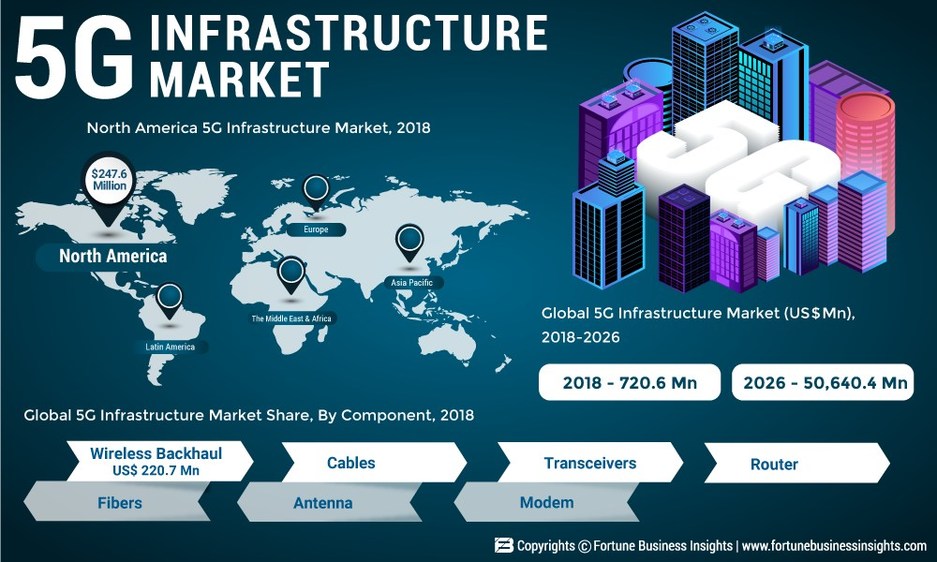
5G Infrastructurerepresents the essential physical and technological components that support the deployment and operation of 5G networks. One of the key elements is the use of small cells. Unlike previous generations that relied on large, centralized towers, 5G uses numerous small, low-power base stations to provide coverage. These cells are deployed in a dense network to ensure high-speed connectivity even in urban environments where data demand is high. Small cells are typically installed on lampposts, buildings, and other structures, allowing 5G networks to handle an immense number of devices efficiently. This dense architecture enables the high capacity and low latency that 5G promises, especially in areas with heavy traffic such as city centers, stadiums, or industrial zones.
Another crucial component of 5G infrastructure is the 5G core network (5GC). The 5GC is a vital part of the 5G network architecture, responsible for managing data traffic, device connections, and network resources. It provides a more flexible and efficient design compared to previous generations, enabling network slicing and ensuring that the network can be adapted to specific needs such as low latency for autonomous vehicles or high bandwidth for streaming services. The 5GC is highly virtualized, meaning it can be implemented through software, improving scalability and flexibility. It also incorporates cloud-based systems that allow for better resource management and fault tolerance, making it more efficient in serving various types of applications and services..
The 5G infrastructure also integrates edge computing, where data is processed closer to the user rather than being sent to a central data center. This reduces latency and speeds up response times, which is essential for applications such as autonomous driving, real-time gaming, and industrial IoT. Edge computing, combined with 5G's ultra-low latency, ensures faster processing and response to user actions, leading to more efficient and reliable service delivery. As 5G continues to roll out, the infrastructure will also evolve, incorporating technologies like millimeter-wave (mmWave) spectrum, massive MIMO (Multiple Input, Multiple Output) antennas, and beamforming, all of which are essential for achieving the faster speeds and greater network capacity that 5G promises over previous generations.
2.Small Cell Networks
Small Cell Networks
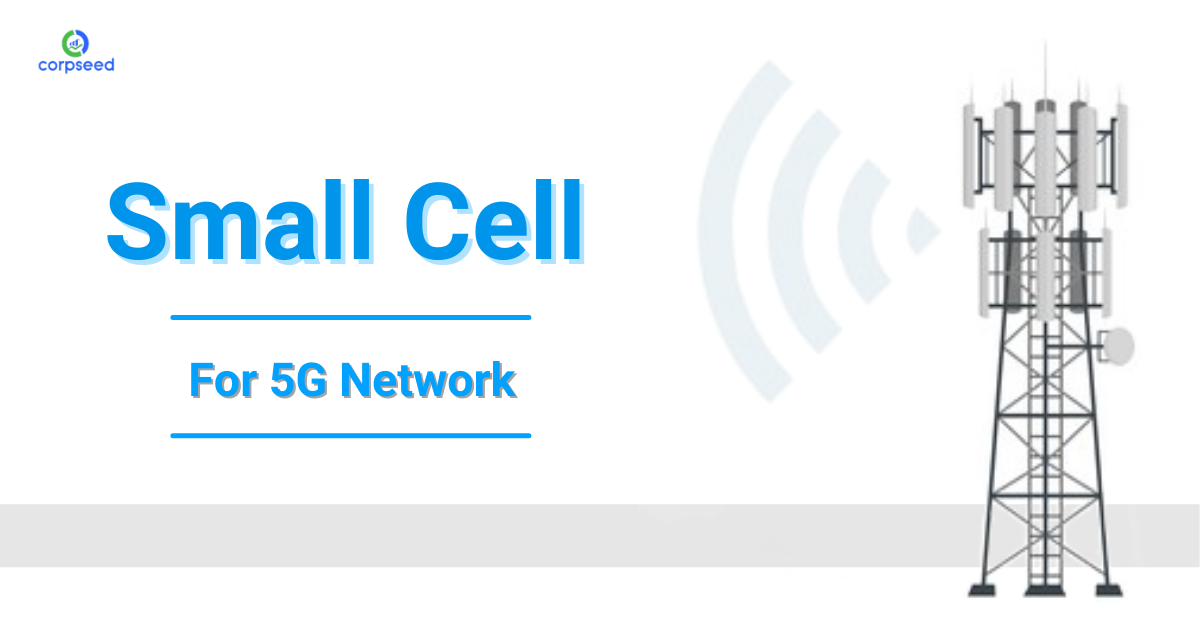
are a key component of 5G infrastructure, playing a critical role in providing high-capacity coverage, especially in densely populated urban areas. These are low-power, compact base stations that are typically used to complement traditional cellular towers. Small cells are much smaller and cheaper than traditional cell towers, allowing for easier and more flexible deployments in locations like city streets, inside buildings, and on utility poles. They are designed to handle the high data traffic demands of modern applications and ensure consistent, high-speed connectivity for 5G networks.
The small cell network operates by providing coverage over short distances, typically ranging from 10 meters to a few kilometers, depending on the type of small cell. There are several types of small cells, including femtocells, picocells, and microcells, each serving different use cases. Femtocells are generally used in residential areas or small businesses, while picocells and microcells are deployed in more urban environments, such as malls, stadiums, or office buildings. They help extend the coverage area of the network, boosting signal strength and improving data speeds for end users. By reducing the distance between the user and the base station, small cells reduce latency and increase the capacity of the network.
One of the significant advantages of small cell networks is their ability to support high data capacity and low latency required by 5G networks. They play a crucial role in meeting the growing demand for wireless data as more devices connect to the internet, especially with the rise of IoT devices and smart cities. Moreover, small cells can also enable network densification, which is essential to provide better service in highly congested areas. Their flexible, cost-effective, and efficient nature makes them an ideal solution for expanding 5G coverage and capacity, ensuring users receive seamless connectivity and faster data speeds.
3.mmWave Technology
mmWave Technology
refers to the use of the millimeter-wave spectrum, which covers frequencies typically between 24 GHz and 100 GHz. This part of the electromagnetic spectrum is crucial for enabling 5G networks, as it offers a much higher bandwidth compared to lower frequency bands used in previous generations of mobile technology. mmWave allows for ultra-fast data transmission, capable of delivering significantly higher speeds, lower latency, and increased network capacity, which are essential features of 5G. This technology is particularly beneficial for high-density environments such as urban areas, stadiums, or other places where there is a need for fast data transfer and large numbers of connected devices.
One of the main advantages of mmWave technology is its ability to provide gigabit-level speeds and high data throughput. With mmWave, it becomes possible to transmit vast amounts of data quickly, which is ideal for applications like augmented reality (AR), virtual reality (VR), 4K or 8K video streaming, and smart city infrastructure. These high-speed capabilities are necessary to support emerging use cases that demand a lot of bandwidth, such as autonomous vehicles, remote surgery, and IoT devices. However, mmWave does have some limitations. For example, it has shorter range and lower penetration capabilities compared to lower frequencies. It can be blocked by obstacles such as buildings, trees, and even heavy rain, making it less effective for wide-area coverage without proper infrastructure.
To overcome these challenges, 5G networks using mmWave technology rely on small cells to create a denser network, often referred to as network densification. These small cells are deployed in strategic locations to ensure the mmWave signal can reach users without significant loss in quality. Beamforming is also utilized in mmWave technology to focus the signal in specific directions, improving its efficiency and range. By combining small cells and beamforming, mmWave can deliver the necessary high-speed data while overcoming its natural limitations in range and signal blockage. Ultimately, mmWave technology is a critical part of 5G’s infrastructure, enabling the next generation of connectivity with its high-speed, low-latency capabilities.

mmWave Technology
refers to the use of the millimeter-wave spectrum, which covers frequencies typically between 24 GHz and 100 GHz. This part of the electromagnetic spectrum is crucial for enabling 5G networks, as it offers a much higher bandwidth compared to lower frequency bands used in previous generations of mobile technology. mmWave allows for ultra-fast data transmission, capable of delivering significantly higher speeds, lower latency, and increased network capacity, which are essential features of 5G. This technology is particularly beneficial for high-density environments such as urban areas, stadiums, or other places where there is a need for fast data transfer and large numbers of connected devices.
One of the main advantages of mmWave technology is its ability to provide gigabit-level speeds and high data throughput. With mmWave, it becomes possible to transmit vast amounts of data quickly, which is ideal for applications like augmented reality (AR), virtual reality (VR), 4K or 8K video streaming, and smart city infrastructure. These high-speed capabilities are necessary to support emerging use cases that demand a lot of bandwidth, such as autonomous vehicles, remote surgery, and IoT devices. However, mmWave does have some limitations. For example, it has shorter range and lower penetration capabilities compared to lower frequencies. It can be blocked by obstacles such as buildings, trees, and even heavy rain, making it less effective for wide-area coverage without proper infrastructure.
To overcome these challenges, 5G networks using mmWave technology rely on small cells to create a denser network, often referred to as network densification. These small cells are deployed in strategic locations to ensure the mmWave signal can reach users without significant loss in quality. Beamforming is also utilized in mmWave technology to focus the signal in specific directions, improving its efficiency and range. By combining small cells and beamforming, mmWave can deliver the necessary high-speed data while overcoming its natural limitations in range and signal blockage. Ultimately, mmWave technology is a critical part of 5G’s infrastructure, enabling the next generation of connectivity with its high-speed, low-latency capabilities.
4.Network Slicing
Network Slicing
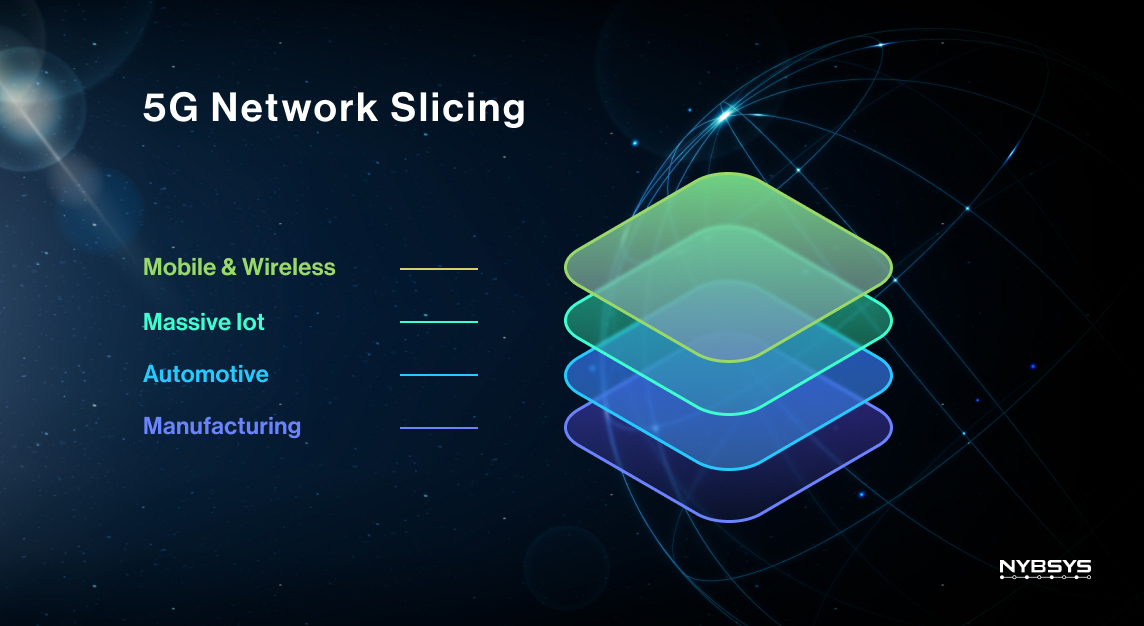
is a key concept in 5G networks that allows for the creation of multiple virtual networks, each tailored to meet specific requirements and use cases. Instead of a one-size-fits-all approach to network architecture, network slicing enables operators to divide their physical network into distinct "slices," where each slice can be optimized for particular applications or services. These slices can have different characteristics in terms of bandwidth, latency, reliability, and security, depending on the specific needs of the service being supported. For example, a slice dedicated to autonomous vehicles may prioritize ultra-low latency and high reliability, while a slice for video streaming may focus on high data throughput and bandwidth.
The concept of network slicing is made possible by virtualization and software-defined networking (SDN). With SDN, operators can control and manage network resources in a more dynamic and flexible manner, ensuring that the resources assigned to each slice meet the specific demands of the application. Network slicing is particularly important for 5G, as it supports the diverse requirements of the various industries and use cases that will rely on this next-generation network. For instance, industrial automation and IoT applications may need dedicated slices to handle large numbers of connected devices with minimal interference, while smart cities may require slices that prioritize high-speed data and low latency.
One of the main advantages of network slicing is its ability to improve network efficiency by enabling the operator to allocate resources more effectively. It also allows for better quality of service (QoS), ensuring that different services with varying levels of criticality are delivered without impacting one another. Moreover, network slicing enables operators to offer customized services to enterprises and industries, creating a more flexible and profitable business model. However, the implementation of network slicing requires advanced orchestration and automation tools to manage the creation, monitoring, and maintenance of each slice, ensuring that they meet the necessary performance criteria without interference. This technology will play a crucial role in unlocking the full potential of 5G, supporting a wide range of applications, from IoT to virtual reality and beyond.
5.5G Core Architecture
5G Core Architecture
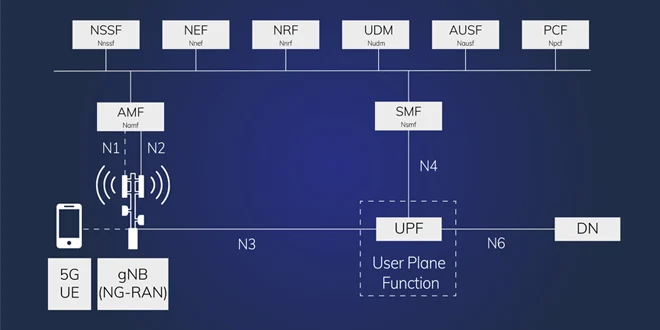
is the heart of the 5G network, designed to provide high-speed, low-latency, and scalable services for a variety of use cases. Unlike the previous generations, the 5G core is cloud-native, software-based, and heavily relies on virtualization and automation. The architecture is built around the concept of a service-based architecture (SBA), where network functions are modular and can interact through APIs. This design offers enhanced flexibility and the ability to scale quickly based on demand. It also allows for better management of diverse applications like IoT, smart cities, and autonomous vehicles, each with unique requirements.
Key components of the 5G core include the Access and Mobility Management Function (AMF), which manages user mobility and registration; the Session Management Function (SMF), which handles session establishment and termination; and the User Plane Function (UPF), which routes user data between devices and the internet. Another important function is the Network Slice Selection Function (NSSF), which supports the concept of network slicing. Network slicing enables operators to create customized virtual networks with tailored characteristics (e.g., low latency, high throughput) to meet specific needs. The Policy Control Function (PCF), on the other hand, handles policy and charging control, ensuring appropriate resource allocation.
The 5G core also enables end-to-end network slicing, offering efficient resource allocation for different industries and use cases. It uses cloud-native principles such as containers, microservices, and virtual network functions (VNFs), allowing for increased scalability, flexibility, and agility. These cloud-based components ensure that the 5G core can support the massive increase in devices, data, and applications expected from 5G. Furthermore, orchestration and automation platforms such as NFV (Network Function Virtualization) and SDN (Software-Defined Networking) help manage the network's complexity, ensuring seamless connectivity, service quality, and low-latency applications across the board.
6.MIMO Technology
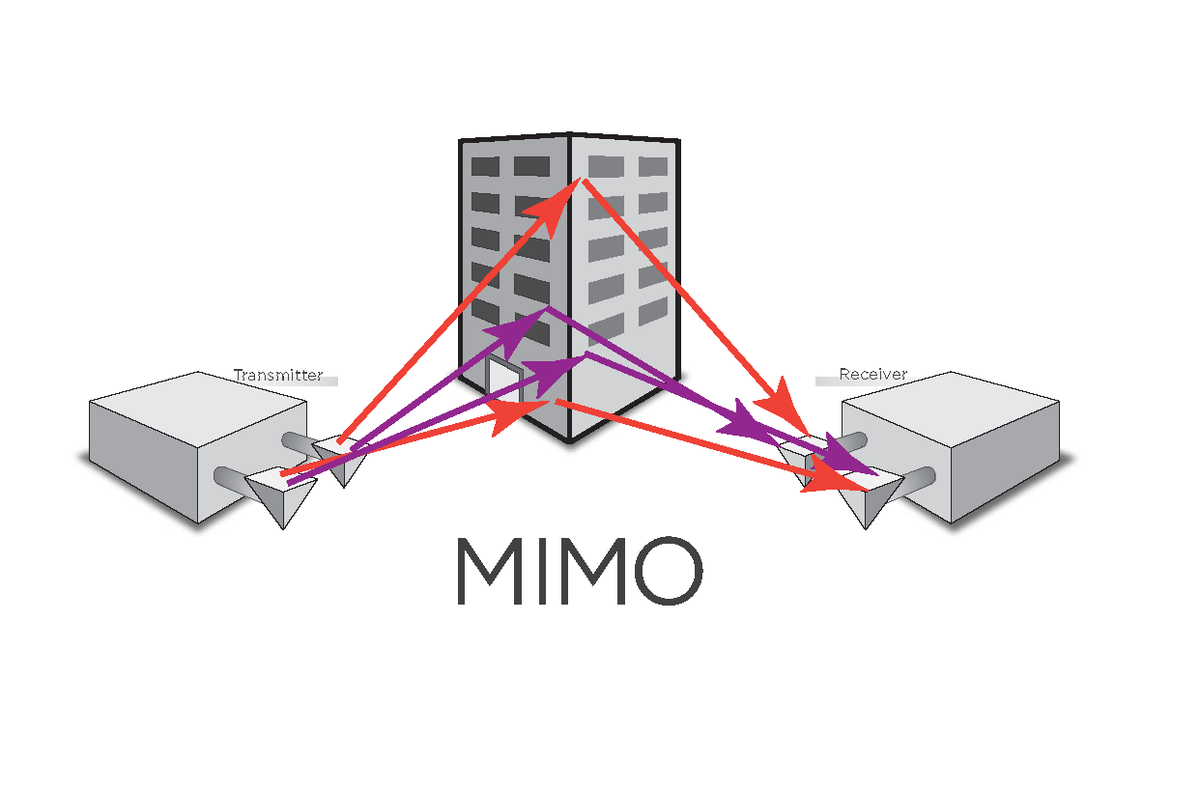
MIMO Technology
technology is a critical component of modern wireless communication systems, including 5G networks, which significantly enhances data transmission efficiency, capacity, and reliability. MIMO uses multiple antennas at both the transmitter and receiver ends to send and receive more than one data signal simultaneously over the same radio channel. By utilizing multiple pathways for signal transmission, MIMO improves the overall data throughput and reduces the impact of interference and signal degradation, which are common challenges in wireless communication.
There are two primary types of MIMO configurations: Spatial Diversity MIMO and Spatial Multiplexing MIMO. Spatial diversity is used to combat fading and improve signal reliability by transmitting the same data over multiple antennas. This redundancy ensures that even if some signals experience interference or attenuation, others can still be received clearly. On the other hand, spatial multiplexing enhances throughput by transmitting independent data streams over multiple antennas, which allows for higher data rates and better spectrum utilization. In 5G, Massive MIMO is a next-generation evolution, involving a large number of antennas (hundreds or even thousands) to dramatically increase data capacity and network performance.
MIMO plays a crucial role in increasing the spectral efficiency of wireless networks by utilizing the available bandwidth more effectively. It also supports advanced features like beamforming, where signals are focused in specific directions rather than broadcasting in all directions. This results in improved signal strength, greater coverage, and more efficient use of network resources. With the advent of 5G, MIMO technology is being pushed to new limits, allowing for higher frequencies (such as mmWave) and contributing to low-latency applications like autonomous driving, IoT, and virtual reality. The widespread deployment of MIMO is essential for meeting the performance demands of future networks.
7.5G Base Stations
5G Base Stations
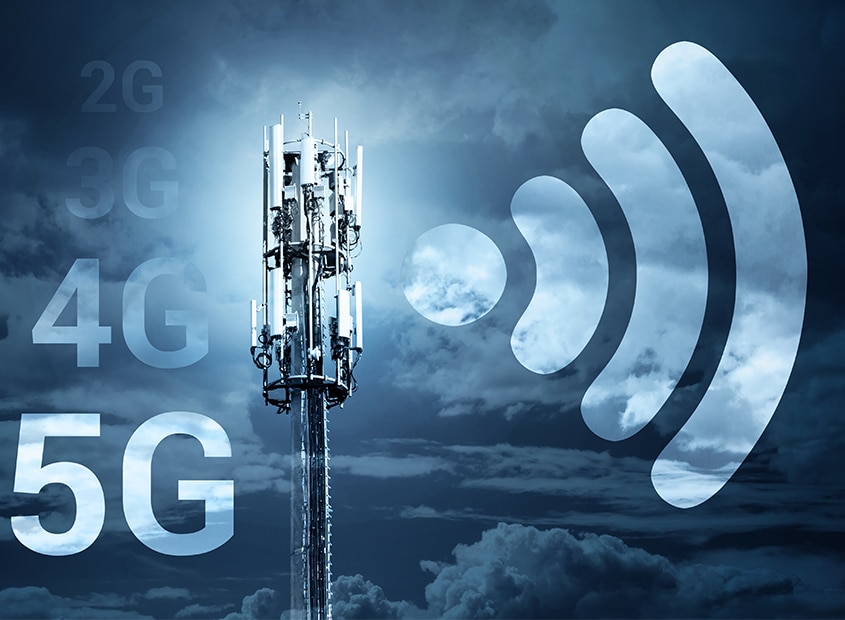
are the crucial infrastructure components responsible for providing wireless connectivity between users and the broader telecommunications network. These base stations, also known as 5G cell sites, transmit and receive radio signals using advanced technologies to support high-speed data transfer, low latency, and large-scale connectivity for diverse applications. Unlike previous generations, 5G base stations are designed to work with new radio (NR) technologies, enabling the network to handle the massive increase in device density, bandwidth, and the need for ultra-low latency that 5G promises.
The architecture of 5G base stations differs from older generations in that it is split into two main components: the radio unit (RU) and the distributed unit (DU). The radio unit handles the actual transmission and reception of wireless signals, while the distributed unit processes the data before sending it to the central network. This split architecture is more flexible and scalable, supporting massive MIMO antennas, beamforming, and higher frequency bands like mmWave to improve coverage and capacity. This flexibility enables 5G networks to deliver high-performance services tailored for different use cases, from smart cities to autonomous vehicles.
5G base stations are also integral to enabling network slicing, a concept where the network is virtually divided into several logical networks, each optimized for specific use cases, such as IoT, high-definition streaming, or emergency services. The stations' use of small cell technology is vital in urban areas, where traditional cell towers might not be practical. Small cells are low-power, compact base stations that are densely deployed to extend coverage and increase network capacity, providing consistent, high-speed connectivity. Moreover, 5G base stations are designed to integrate with edge computing, allowing for faster data processing and reduced latency by bringing data storage and computation closer to the user.
8.Spectrum Allocation for 5G
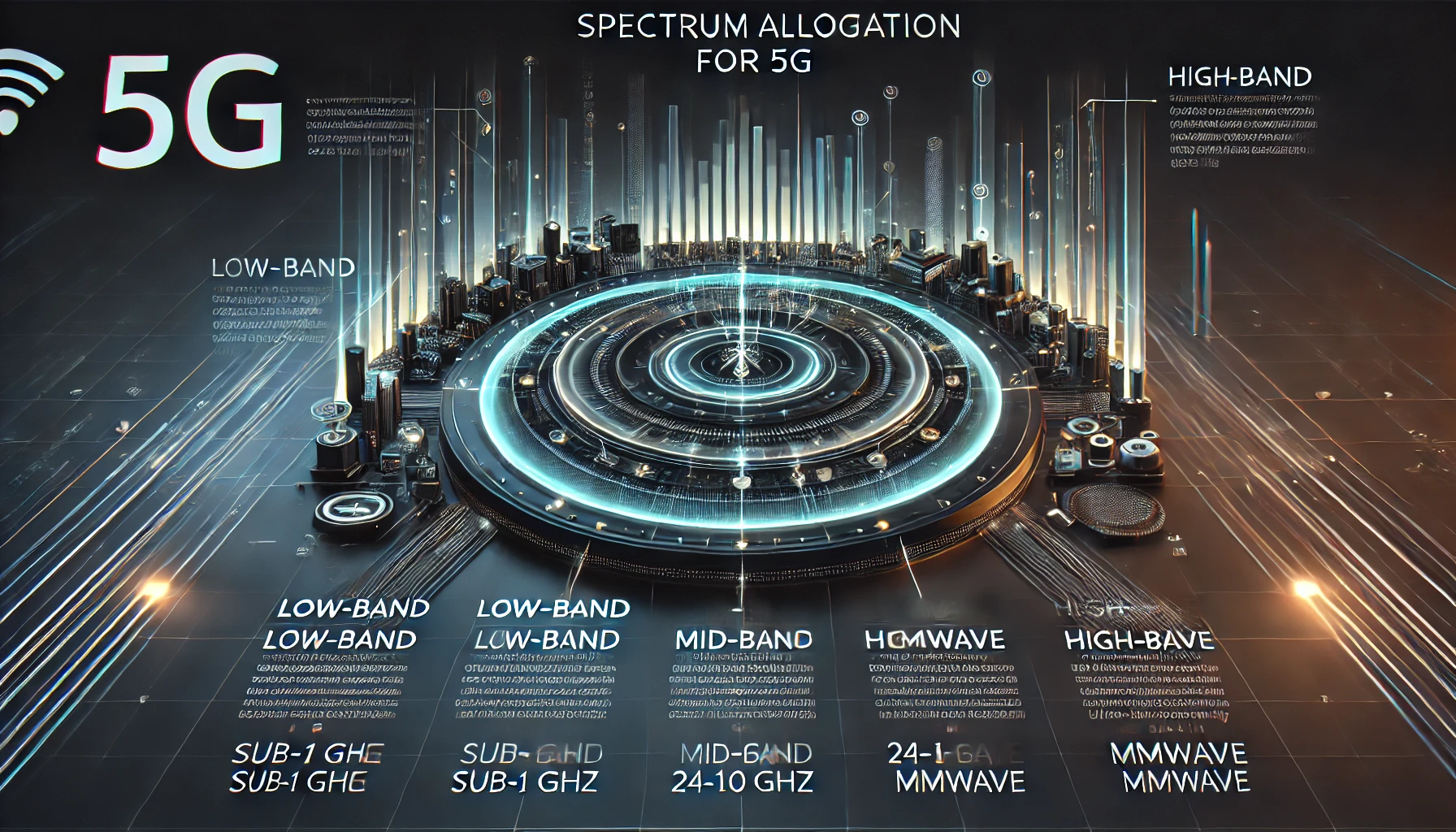
Spectrum Allocation for 5Gis one of the key factors that will determine the performance, coverage, and capacity of 5G networks. It involves assigning specific frequency bands to wireless communication services, ensuring that the bandwidth is effectively utilized to support high-speed, low-latency connections for a wide range of devices and applications. 5G leverages three primary spectrum categories: Low-band (Sub-1 GHz), Mid-band (1 GHz to 6 GHz), and High-band (above 24 GHz), each offering different trade-offs between coverage, speed, and capacity.
Low-band spectrum: This spectrum, often referred to as Sub-1 GHz, is the same range used by 4G LTE networks and provides broad coverage with excellent penetration through obstacles like buildings and walls. While it offers lower speeds compared to higher frequency bands, it is ideal for wide-area coverage, particularly in rural and suburban areas. Low-band spectrum enables stable connectivity over long distances, making it perfect for basic mobile broadband services and applications where ultra-fast speeds are not as critical.
Mid-band spectrum: Often called the golden band for 5G, the 1 GHz to 6 GHz range offers a balance between coverage and capacity. This spectrum supports faster speeds than low-band and can handle more data traffic, which is important for urban environments and dense population areas. It also offers improved latency and network reliability, which are key for applications like IoT, smart cities, and industrial automation. However, mid-band frequencies have a shorter range and might require more base stations to maintain coverage, especially in challenging environments.
Spectrum Allocation for 5Gis one of the key factors that will determine the performance, coverage, and capacity of 5G networks. It involves assigning specific frequency bands to wireless communication services, ensuring that the bandwidth is effectively utilized to support high-speed, low-latency connections for a wide range of devices and applications. 5G leverages three primary spectrum categories: Low-band (Sub-1 GHz), Mid-band (1 GHz to 6 GHz), and High-band (above 24 GHz), each offering different trade-offs between coverage, speed, and capacity.
Low-band spectrum: This spectrum, often referred to as Sub-1 GHz, is the same range used by 4G LTE networks and provides broad coverage with excellent penetration through obstacles like buildings and walls. While it offers lower speeds compared to higher frequency bands, it is ideal for wide-area coverage, particularly in rural and suburban areas. Low-band spectrum enables stable connectivity over long distances, making it perfect for basic mobile broadband services and applications where ultra-fast speeds are not as critical.
Mid-band spectrum: Often called the golden band for 5G, the 1 GHz to 6 GHz range offers a balance between coverage and capacity. This spectrum supports faster speeds than low-band and can handle more data traffic, which is important for urban environments and dense population areas. It also offers improved latency and network reliability, which are key for applications like IoT, smart cities, and industrial automation. However, mid-band frequencies have a shorter range and might require more base stations to maintain coverage, especially in challenging environments.
Comments